Most real-time asset tracking systems are built only to show the movement of a dot on a map. Useful, yes…but limited.
Teams are still left to interpret everything themselves:
- Why is the asset there?
- Is the process on track?
- Was a compliance step missed?
- What should happen next?
The deeper issue is that these systems aren’t built to support real decision-making. They present information, but without context. And as recent research shows, that gap slows teams down.
In a 2023 study on digital shop floor management from Elsevier, Pernille Clausen, PhD, MSc in Engineering, notes that “practitioners are loaded with various pieces of information every day, thus, they need to be able to understand what information is relevant and exclude the rest.” In other words, simply presenting data, even accurate data, does not help teams act unless the system translates that information into meaning.
That distinction is at the core of the problem.
Why Location Alone Isn’t Enough
When visibility tools stop at “here’s where the item is,” the burden of additional manual work and complex decision-making shifts entirely to the front-line workers. Operators and supervisors must manually interpret deviations, sequence errors, bottlenecks, or quality risks, often with data that’s incomplete, outdated, or disconnected across systems.
This is how one-off conversations, gut-feeling responses, and constant re-checking seep back into daily operations.
Where Context Begins to Matter
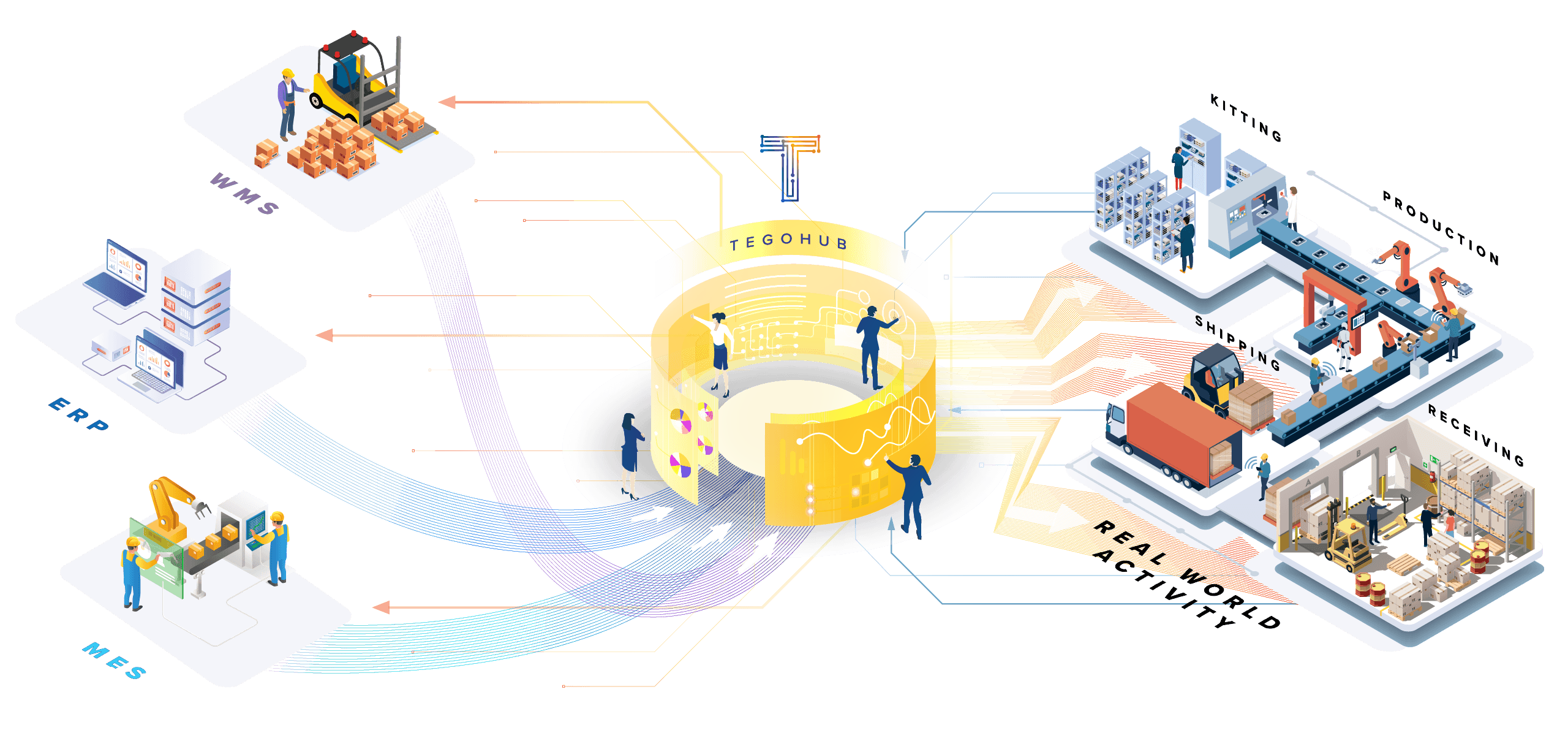
A solution that understands the business logic behind the movement, and why that movement matters, can surface insights automatically, such as:
- Out-of-sequence work
- Items that missed inspection or documentation
- Bottlenecks forming in real time
- Quality or compliance risks
- Next expected steps based on the workflow
That’s the difference between seeing a dot and understanding what the dot means for the business.
Moving From Observation to Action
This type of intelligence strengthens decision-making and reduces the daily challenges that come from being unsure whether something is correct, missing, or drifting off process. It helps frontline teams focus on running operations, not manually deciphering them.
Clausen’s work reinforces this shift. If practitioners are already overloaded with fragmented information, then success depends not on showing more data, but on providing “manufacturing data in real-time… making it possible to respond to deviations quickly… before an unplanned event affects the production flow.”
And that is exactly where modern manufacturers are starting to differentiate; not just by knowing where things are but by understanding what should happen next.